
The Algorithm
4 min read
Overview
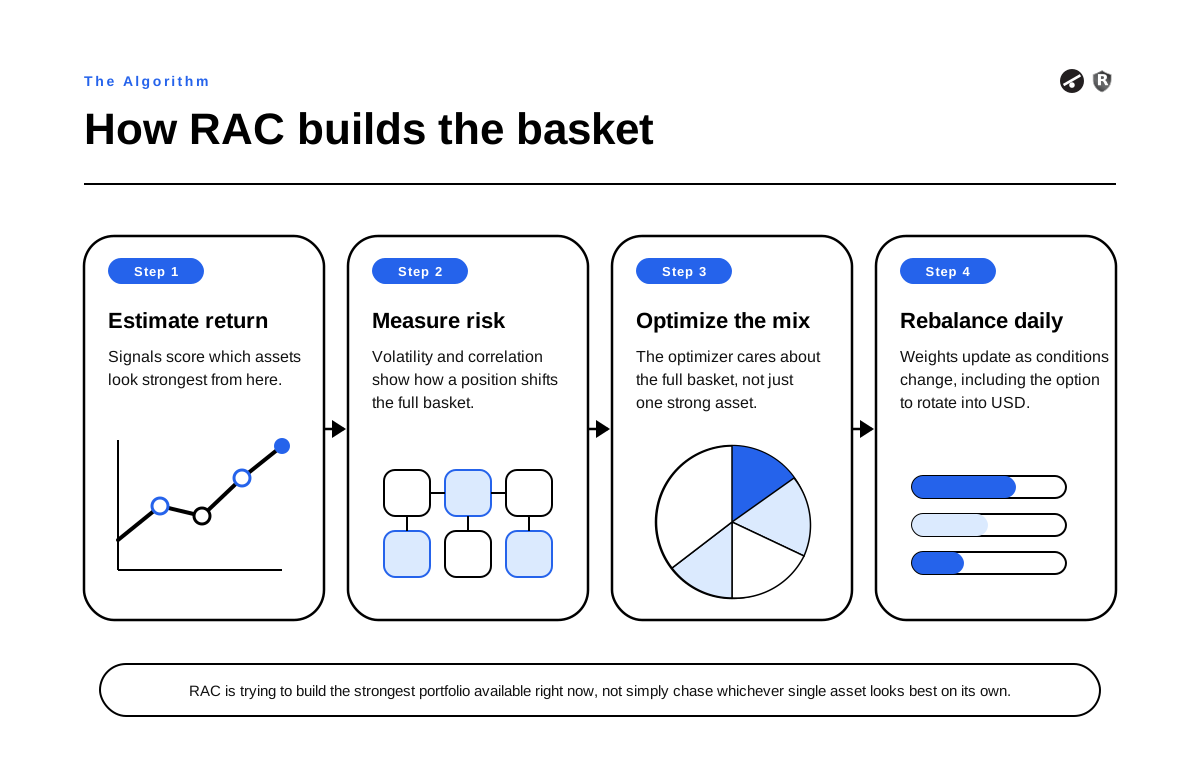
RAC is a risk-adjusted index designed to allocate capital toward the strongest opportunities while reducing unnecessary risk inside the basket.
At a high level, the algorithm does three things:
- Estimates which assets offer the best forward-looking return potential.
- Measures how much risk each asset introduces, both on its own and relative to the rest of the basket.
- Constructs a portfolio that seeks the best expected outcome per unit of risk, while preserving the flexibility to allocate into USD-backed stablecoins when market conditions warrant caution.
The result is not a simple “top assets” list. It is an optimization process that balances return, volatility, and correlation across the full portfolio.
Objective
The algorithm’s job is to build a portfolio that is:
- Exposed to assets with strong expected performance
- Diversified across uncorrelated or less-correlated opportunities
- Protected from avoidable concentration risk
- Able to move partially or fully into USD when the risk-adjusted opportunity set deteriorates
In practical terms, RAC is trying to maximize portfolio quality, not just raw upside.
Why Optimization Matters
Owning the highest-conviction assets is not enough.
Two assets can both look attractive individually, but if they move together, combining them may not improve the basket much at all. Likewise, an asset with very high expected return may still be a poor addition if it introduces outsized volatility or destabilizes the portfolio.
That is why RAC optimizes at the portfolio level.
Instead of asking:
“Which single assets look best?”
the algorithm asks:
“Which combination of assets produces the strongest risk-adjusted portfolio?”
Core Inputs
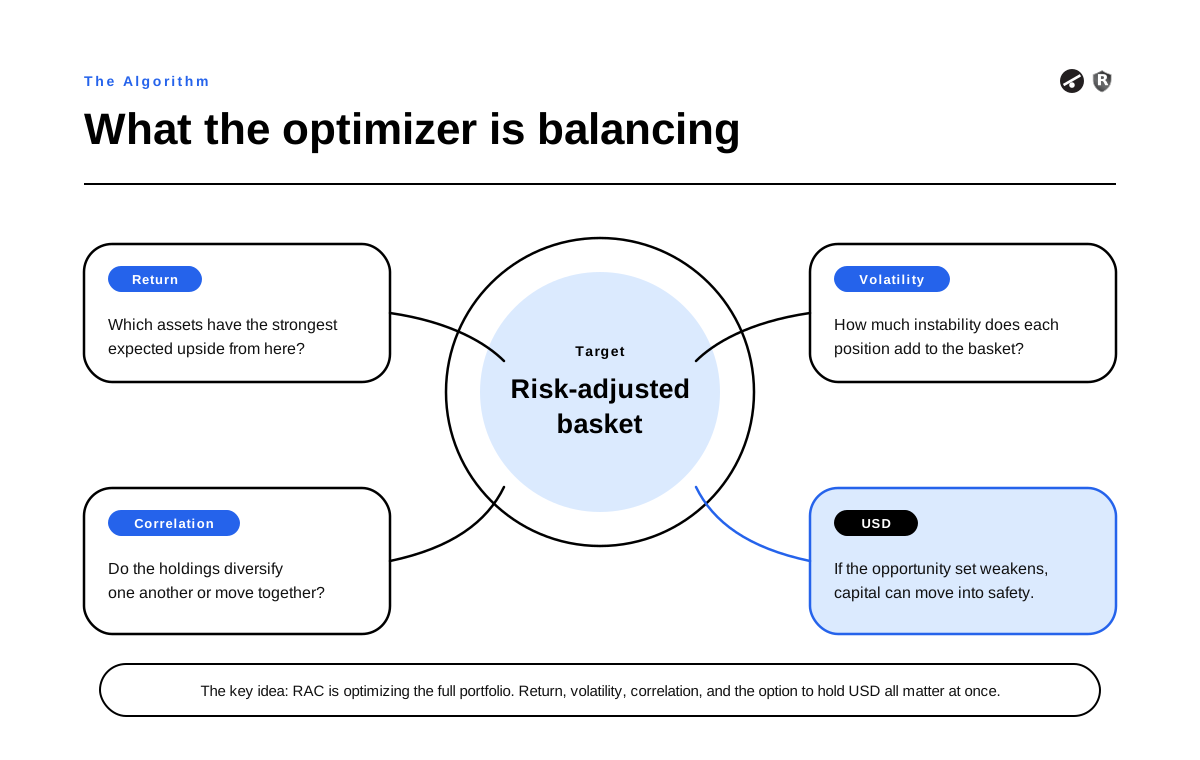
The algorithm evaluates each eligible asset using three primary dimensions:
Expected Return
A forward-looking estimate of how attractive an asset is relative to the rest of the universe.
This is the “reward” side of the problem.
Volatility
A measure of how unstable or variable an asset’s behavior is.
This is the first layer of risk.
Correlation
A measure of how similarly two assets move.
Correlation matters because portfolio risk is not just the sum of individual asset risks. The interaction between assets changes the shape of the basket.
How the Portfolio Is Built
RAC uses a portfolio optimization framework inspired by modern portfolio theory.
In simplified form, the process looks like this:
- Start with the eligible asset universe.
- Estimate expected return, volatility, and correlation for each asset.
- Evaluate many possible portfolio combinations.
- Score those portfolios based on their tradeoff between expected return and risk.
- Select the allocation that best satisfies the optimization objective.
- Rebalance the index to the new target weights.
This means weights are not assigned arbitrarily. Every position exists in the context of the full basket.
Why Correlation Is So Important
Correlation is one of the most important pieces of the algorithm.
If two assets are highly correlated, holding both may do little to improve the portfolio. If two assets have attractive expected returns but behave differently across market regimes, combining them can materially improve risk-adjusted performance.
This is one of the reasons RAC can look different from a market-cap index or a simple momentum basket.
The algorithm is not just selecting assets. It is selecting interactions.
USD Allocation
A key extension in RAC is the ability to allocate into USD-backed stablecoins.
Traditional portfolio construction often assumes capital must remain fully allocated across risky assets. RAC does not make that assumption.
When the available risky opportunities are not attractive on a risk-adjusted basis, the algorithm can reduce exposure and allocate part of the portfolio to USD.
This matters for two reasons:
- It gives the index a true defensive posture
- It allows the optimizer to treat safety as an actual allocation choice, not just the absence of conviction
In difficult markets, the best portfolio is not always a different mix of risk. Sometimes it is less risk.
Rebalancing
The algorithm evaluates the opportunity set on a recurring basis and updates target weights accordingly.
This rebalancing process is what allows RAC to adapt as market structure changes.
In strong conditions, the portfolio may lean further into risky assets. In weaker conditions, the portfolio may shift toward more defensive positioning, including USD.
RAC is designed to be dynamic, not static.
What the Algorithm Does Not Do
The algorithm is powerful, but it is not omniscient.
It does not perfectly predict the future. It does not eliminate risk. It does not fully capture every off-chain, political, regulatory, or black swan event from price data alone.
RAC's target weights are set directly by the algorithm: it decides at 15:00 UTC each day and RAC applies the decision at 16:10 UTC. There is no voting or veto step.
Summary
RAC’s algorithm is designed to answer a single question:
What is the strongest portfolio we can build right now, after accounting for expected return, volatility, correlation, and the option to hold USD?
That means RAC is not just chasing upside.
It is continuously trying to build the most efficient basket available: one that seeks performance, reduces unnecessary risk, and adapts as conditions change.